

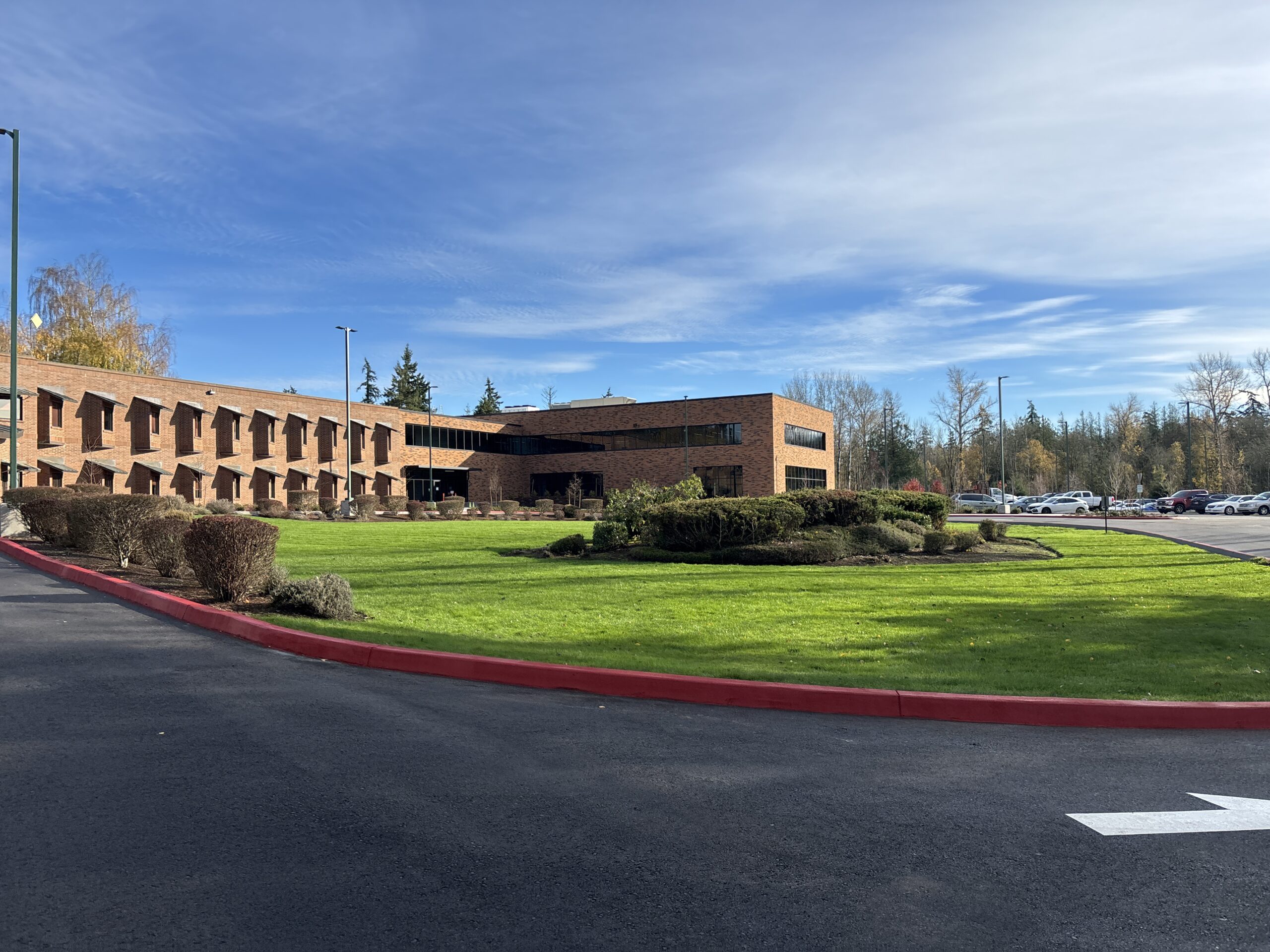
It’s not just another brick in the wall — it’s a statement in design.
When PACCAR made the decision to expand its Technical Center campus in Mount Vernon, WA, the mission was clear: create a workplace environment that reflects the company’s legacy of engineering excellence while setting the stage for the next era of innovation. The original facility, a proud product of 1980s brick-and-mortar craftsmanship, carries the unmistakable character of its time — strong lines, durable materials, and a quiet confidence in its form. But as PACCAR’s engineering teams continued to evolve, so did the need for a workspace that could support collaboration at a global scale.
The new 36,000-square-foot Engineering Office Expansion rises to meet that challenge. Designed by Freiheit Architecture, in partnership with a dedicated team of engineers, designers, builders, and specialty consultants, the building stands as a modern complement to its decades-old companion. The guiding philosophy was simple and honest: when you can’t match it, miss it. Rather than mimicking the architecture of the 1980s structure, the expansion acknowledges it with respect — maintaining campus masonry textures and tones, ribbon windows, and simple lines — while embracing a more contemporary expression that unmistakably belongs to 2025.
The result is an addition that feels both familiar and excitingly new.
A Workplace That Works Harder
Inside, the building opens into a sweeping expanse of open office space — 36,000 square feet designed to support connection, focus, and flexibility. The layout is intentional, balancing the large-scale engineering workflows that PACCAR is known for with the more fluid, team-based collaboration that defines modern product development. Sunlight flows across workstations, fostering an atmosphere that feels energizing rather than crowded. Here, engineers, analysts, and designers work side by side with clarity and openness at the heart of the concept.
Surrounding this activity are sleek and inviting managerial offices, each framed in full-height glass. These private spaces echo the transparency of PACCAR’s culture — open, accessible leadership paired with confidentiality when needed. The design delivers a sense of refinement without compromising approachability, allowing managers to remain visually connected to their teams while enjoying acoustically comfortable, functional work environments.
Design That Complements the Architecture
The modern furniture selections, provided thoughtfully by Peoplespace, play a crucial role in tying the building’s interior aesthetic back to its architectural intent. With a palette of materials and forms that echo the structure’s clean lines and contemporary feel, and interior design, each piece sits comfortably within the space — never overpowering, always enhancing. The furnishings reinforce the building’s dual purpose: a place where innovation is cultured, and people can genuinely enjoy spending their time.
Spaces That Bring the Campus Together
A central cafeteria forms one of the most important touchpoints of the project. Serving not only the new building but the entire campus, this large and thoughtfully designed space is more than a dining area — it’s a social anchor. Here, employees gather over meals, ideas spark during spontaneous conversations, and the building’s open, welcoming character is felt most deeply.
Adjacent to it, a private executive meeting and dining area offers a space for leadership-level discussion, quiet connection, and hosting visiting partners. With refined materials, warm lighting, and acoustic comfort, the room feels personal and elevated — a place where strategy and hospitality meet.
Bringing the Outdoors In
The expansion also offers outdoor amenities that enhance the daily experience of campus life. Landscaped walkways, generous patio seating, and planting areas designed by Atwell create a natural, restorative environment just steps from the engineering floors. Whether employees are taking lunch outside, hosting an informal team meeting, or simply stepping away from their screens for fresh air, the landscape design brings new energy and wellness to the site.
A Design That Honors the Past While Looking Ahead
Throughout the project, the design team remained committed to honoring the character of the original 1980s building. The new façade echoes the masonry rhythms of its neighbor — not in imitation, but in conversation. Subtle nods to materiality and proportion allow the two structures to coexist gracefully, while the new expansion confidently expresses its own identity through contemporary glazing, crisp lines, and a distinctly modern architectural voice.
This approach — respecting the past without recreating it — underscores the project’s purpose. PACCAR is an organization built on over a hundred years of engineering leadership, yet firmly committed to shaping the future of transportation. The architecture reflects that balance.
A Team Effort
This vision came to life through the collaboration of an exceptional project team:
Architect & Interior Designer: Freiheit Architecture
General Contractor: Howard S. Wright
Civil & Structural Engineering: KPFF
Landscape Architect: Atwell
Mechanical Engineering: Blythe
Lighting Design: Stantec
Electrical & Low Voltage: Valley Electric
Each partner brought precision, creativity, and dedication to the project, ensuring that the new expansion doesn’t simply add square footage — it transforms the way PACCAR teams work, collaborate, and innovate.
A Statement in Design
The PACCAR Technical Center Engineering Office Expansion marks a meaningful moment in the campus’s evolution. It’s a building that stands confidently beside its older companion, honoring its lineage without being bound by it. It brings new life to the workplace, new energy to the campus, and new possibilities for the teams who shape PACCAR’s future.
It’s not just another brick in the wall — it’s a statement in design.